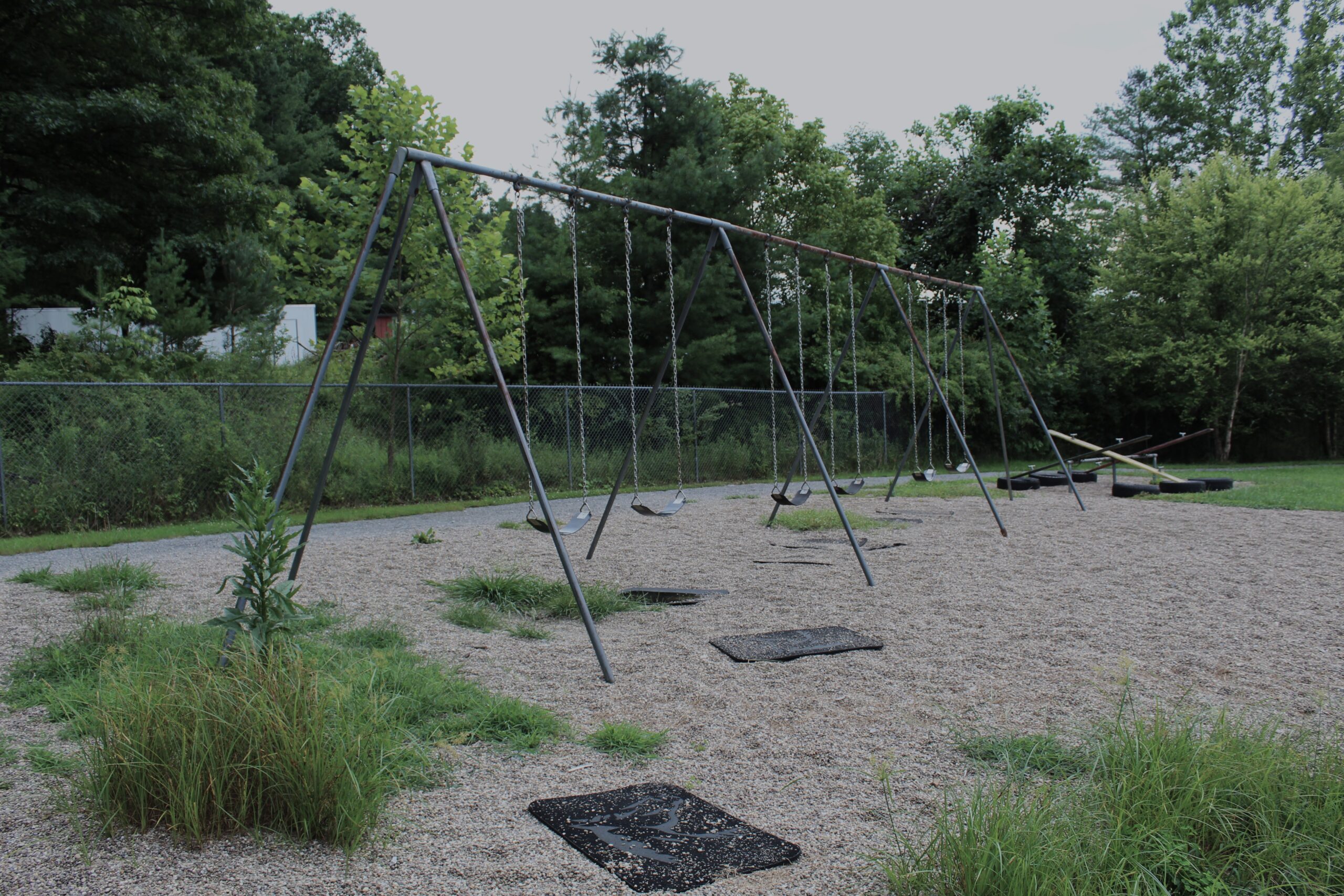
A Childcare Desert in a Whitewater Town
“It’s Taco Tuesdays at your favorite restaurant; you’ve made it a tradition to have dinner there with your family every week. Tonight your wait time seems unusually long and you suddenly realize that your favorite server, Mary, is not there. ‘Where is Mary tonight?’ you ask. ‘Her after hours day care is sick and she didn’t have any other option for child care … If we can’t get enough help, we will have to start closing earlier!”
Any functional local community needs childcare facilities, but the need is amplified in a recreation economy that relies on the young and active workforce needed to guide overnight trips, lead active programming, and invest energy into providing services that are in high demand outside of regular business hours. Here in the Mon Forest Region, we are surrounded by wild lands and rivers rich in recreation-based business opportunities, yet we find ourselves in a childcare desert. This dichotomy creates a major barrier to the development of a stable workforce to grow sustainable businesses.
This problem, prevalent in this area, extends throughout West Virginia. More than 28,000 children lack access to licensed care across the state, according to Childcare Aware. In many rural communities, more daycare centers are closing than opening, further restricting an already limited supply and forcing families to travel long distances to find care. In an extreme case, the only remaining childcare facility in Clay County closed down this year. In our service area, Tucker County only has care available for 25% of the children who reside in the county, and there are only 9 operating centers, as stated by Childcare Aware. Even in Barbour County where there are 16 childcare centers, 38% of kids still are excluded from adequate care, negatively impacting many households’ ability to take part in the workforce.
This problem isn’t a question of finding GOOD caregivers for our children – it’s about finding ANYONE to watch them while we work – and the problem is exacerbated by challenges on all sides, making this a multifactorial issue shaped by a lack of affordable options, the difficulty remaining facilities face in hiring care providers, and the inability to provide livable wages within the sector.
The U.S. Department of Health and Human Services states that childcare tuition is considered unaffordable when it surpasses 7% of a household’s annual income. Still, the Economic Policy Institute states that “infant care for one child would take up 13.50% of a median family’s income in West Virginia.” Today, West Virginia families spend about $800 per month on average for infant childcare. Considering that, for low-income families, this amount could mean choosing between rent and daycare, this essential service is out of reach for low-income workers – effectively making them no-income non-workers.
Childcare providers are also facing difficulties finding staff who can join their teams long-term. Childcare is labor-intensive, but pay ranks among the lowest of any profession, with workers earning between $13 on average in West Virginia, according to the U.S. Bureau of Labor Statistics. This makes the career unattractive and leads to staffing shortages across the sector. At the same time, because the jobs don’t provide a living wage, employees end up in a constant search for better-compensated opportunities, leading to a high turnover rate. Would you open a daycare center given this reality?
Financing Child Care
Woodlands is bringing our resources as a Community Development Financial Institution (CDFI) to try to pick away at this problem. We approved two loans to childcare centers in 2025 and provide ongoing technical assistance to help business owners like these tackle barriers to running a successful business.
One of the centers requested our assistance to help finance expansion into a new service area. Another received a loan to make facility upgrades that would help the business operate closer to capacity and serve more families. When operating on such thin margins, something as simple as friendly financing options, and a loan officer who understands your community can make the difference for a childcare center staying open through the next day, the next season, the next year. An understanding financial partner and business advisor to talk through problems can show an overwhelmed small business owner that they aren’t alone in their struggle; that someone else sees them, that we get it. That we care. We can’t directly help children access nurturing care, but we can help the business owners avoid shutting down and our workforce losing a critical amenity.
We lack childcare facilities for many reasons, some more inherent to the realities of life in West Virginia – small, dispersed population centers, lack of qualified workers or code-compliant facilities. This is a complicated problem to fully solve, but every additional child or family who can find a placement helps address this deep-seeded problem.
P.S: Another recent issue further jeopardizing the ability to keep centers open is that West Virginia’s Department of Human Services recently changed its reimbursement model. For subsidized facilities, instead of being paid for enrollment numbers (the number of children signed up for a program), they are reimbursed for attendance, where providers can be paid in full only if children attend for at least 4 hours a day once a month. This becomes an issue because it fails to account for unexpected situations, such as illness or family emergencies, which increases uncertainty for providers about the future success of their businesses.
Read more at the Mountain State Spotlight: https://mountainstatespotlight.org/2026/01/29/childcare-crisis-wv-lawmakers-work

Mon Forest Towns Initiative Awarded $1.89 ARC POWER Grant
Elkins, West Virginia, October 16, 2024 — Woodlands Community Lender, on behalf of the Mon Forest Towns Partnership, has been awarded $1,897,136 by the Appalachian Regional Commission (ARC) to ...
Read More
Elkins Area Shared Trails Announces Trail Plan
Dozens of community members filled Big Timber Brewing’s new tap room on Tuesday evening to learn more about a trail development plan that has been created for Elkins. Produced ...
Read More